Stair Aware: Sensors, PCBs, and a Nightclub
A stair lighting product that senses people and lights their way. I took it from sensor research through circuit board cost-downs and aluminum housings to a nightclub pilot, before the pandemic stopped it one step short of manufacturing.
March 2020
The setup
Stair Aware was a lighting system meant to make stairs safer without making buildings uglier. Sensors detect people moving through a stairway, and the lights respond to them. I was brought in to build a prototype to test the idea, and it turned into the whole product development process.
The constraints
- Every staircase is different. They vary in shape, size, and material, and they’re all governed by strict stair safety codes.
- The electronics live underfoot in busy public spaces, so they have to handle wear, moisture, and spilled drinks.
- The parts cost had to stay low. Every sensor and connector had to justify its price.
What I did
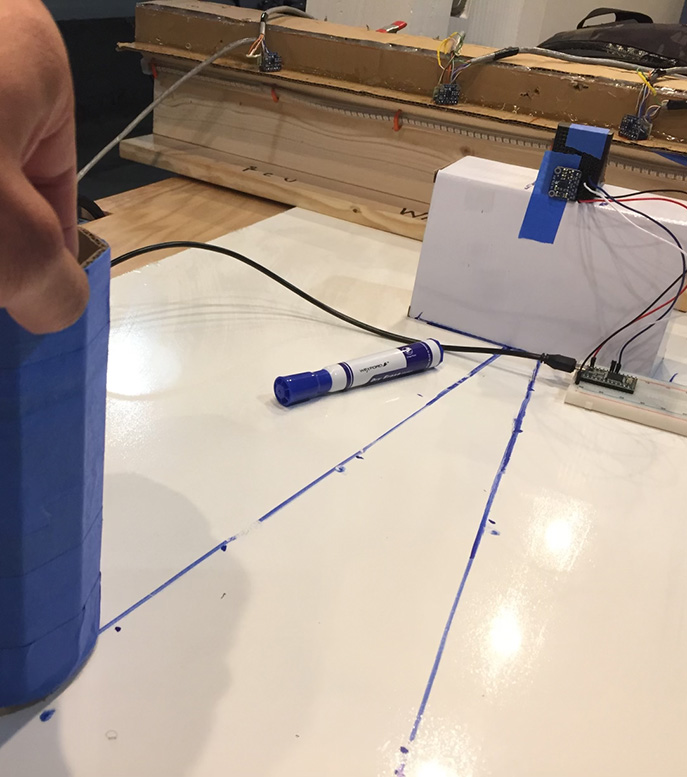
I started with sensing. I researched the available sensor types, then tested the best candidates for accuracy and range in different conditions, including ambient light, outdoor use, and edge cases. The winner was a small infrared time-of-flight sensor, basically a tiny lidar. It was small, low power, and cheap enough to put several on each stair.
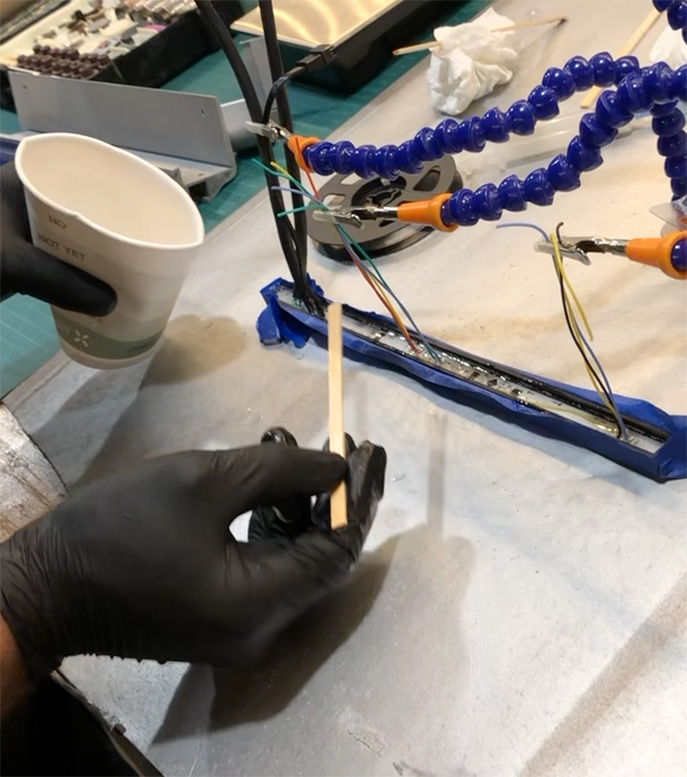
From there the engineering built on itself. Through rough prototypes I worked out sensor layouts that used as few sensors per stair as possible. My first circuit board design gave each sensor its own board, connected by ribbon cable, but the connectors alone made it too expensive. I redesigned it as a single long board, which was cheaper, easier to assemble, and kept the sensor spacing consistent without any extra effort. The sensors could see through infrared-transmissive acrylic, so I enclosed the boards behind it and sealed the housing with silicone to keep out moisture.
For the physical product, I worked with a mechanical engineer on a modular aluminum housing. We went through a series of 3D-printed versions until the design could fit the huge variety of real staircases and still meet the safety codes we’d researched.
The outcome
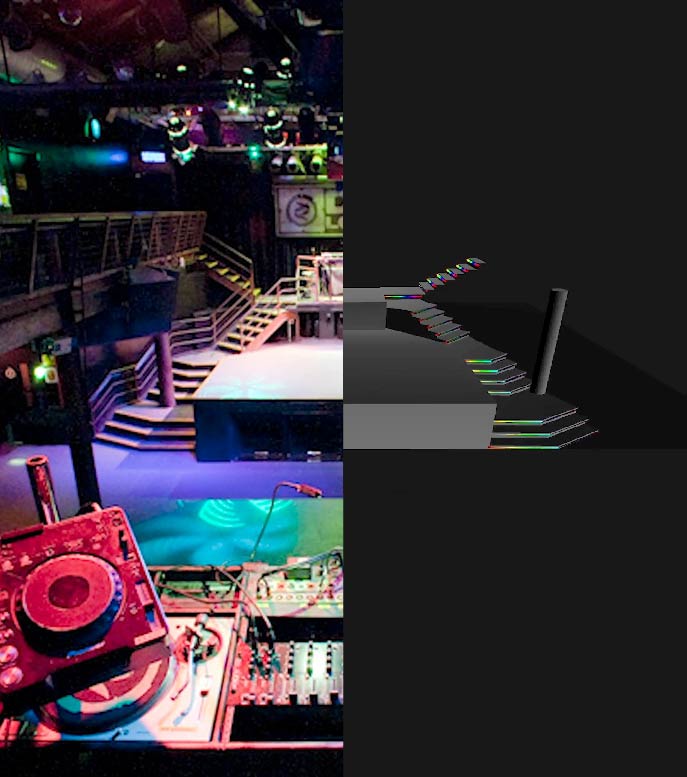
We partnered with DNA Lounge, a long-running San Francisco nightclub whose stairs had caused real injuries over the years. They wanted safer stairs and better atmosphere in one install. The pilot was planned, the design was finished, and we had manufacturing quotes in hand.
Then the pandemic hit, and nightclubs were among the hardest-hit businesses. The product stopped one step short of production. I still took a sensor from a breadboard to a design ready to manufacture, and I learned a lot doing it.