PropMesh: A Radio Mesh for Halloween Props
An open-source system of cheap ESP32 boards that run a yard full of Halloween props over a radio mesh. Sensors, lights, servos, and battery candles are all set up from a web console with no code. It ran my own yard on Halloween 2026.
October 2026
The setup
I love Halloween, and every year I hit the same wall: I start building in October and run out of time. Each season left behind another one-off controller. There was a mesh of little ESP32 boards, a stepper motor that lifted a prop lid, a fire lantern, and a bridge for Bluetooth flood lights. I wrote most of them by hand, and none of them talked to each other properly.
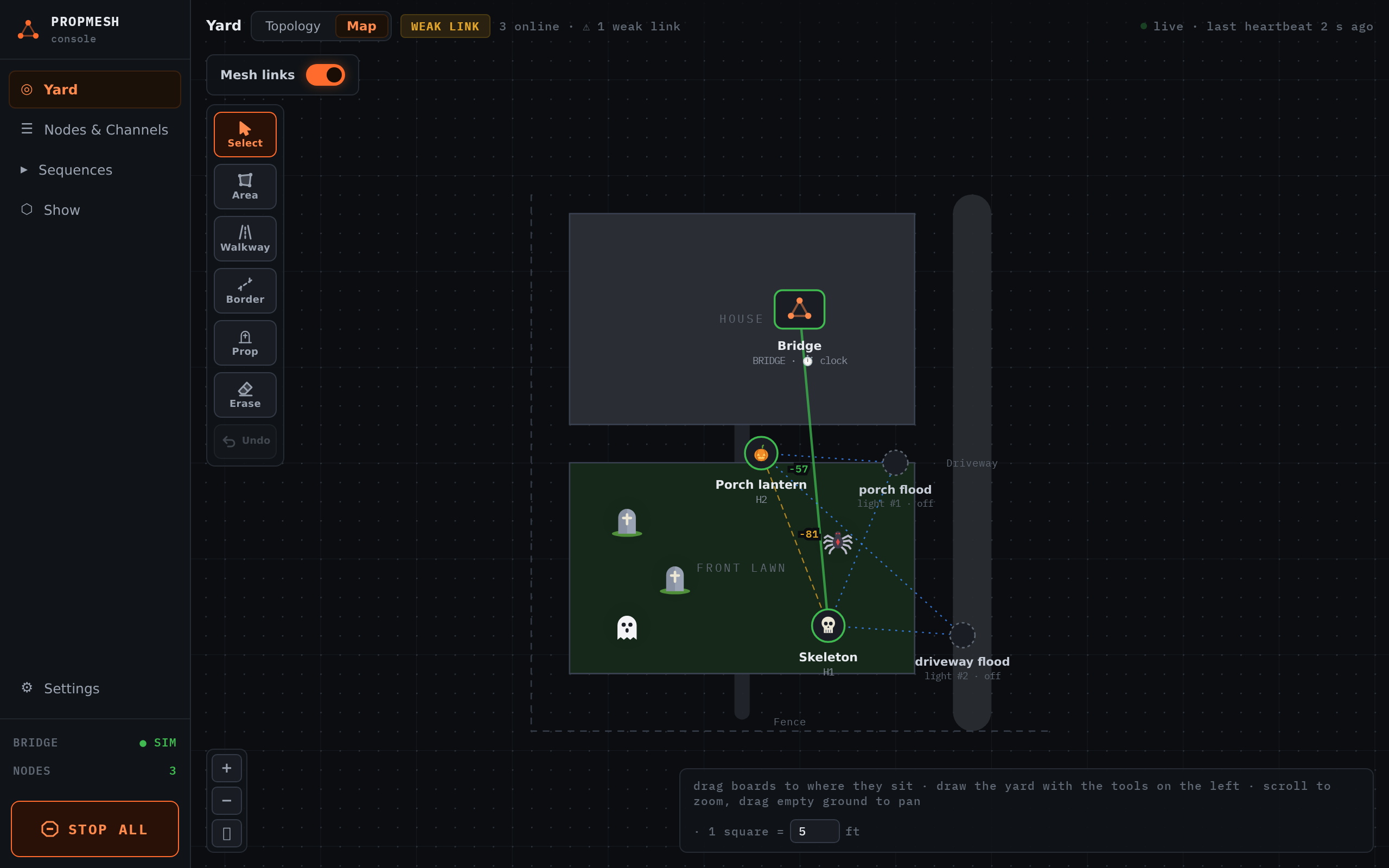
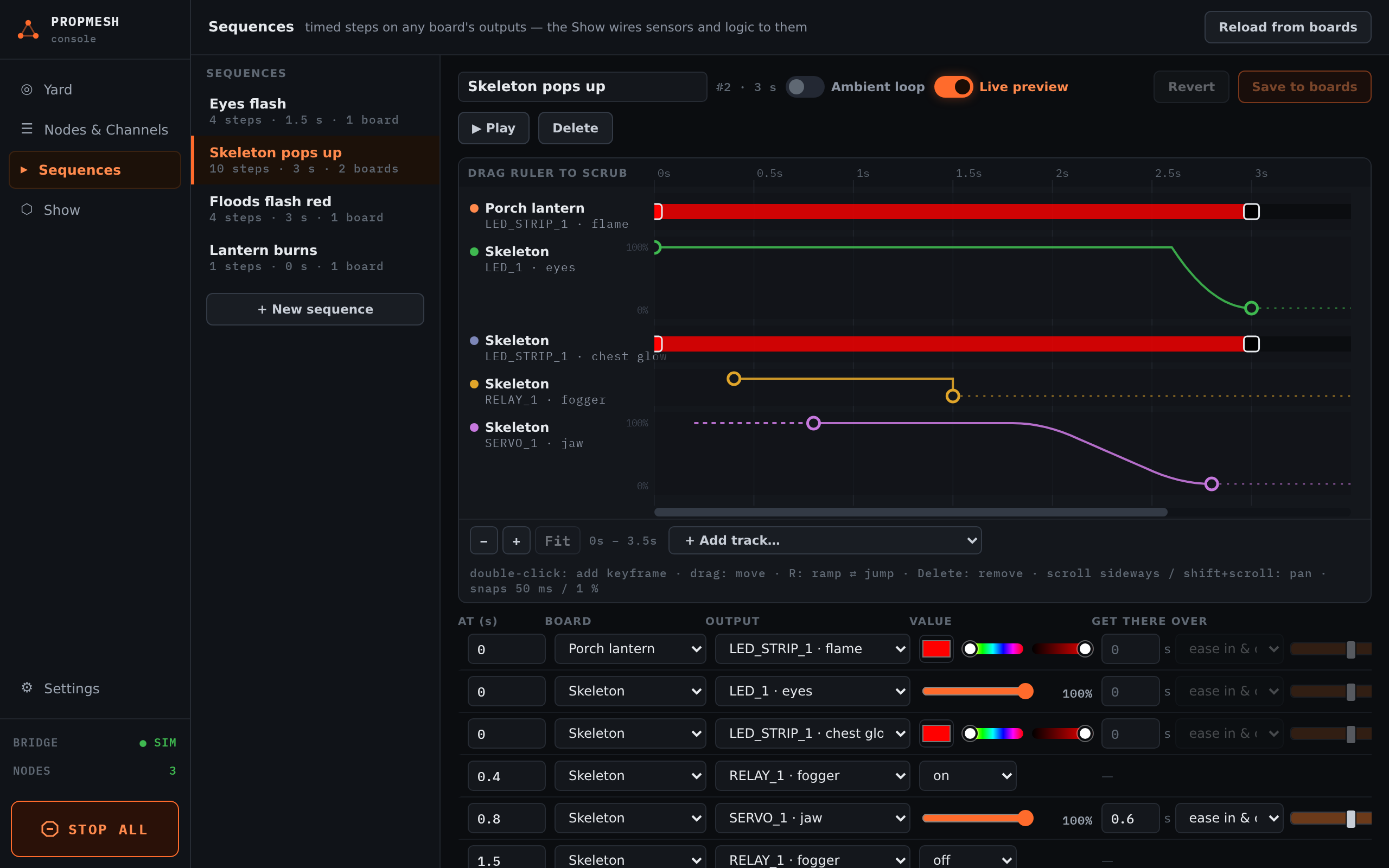
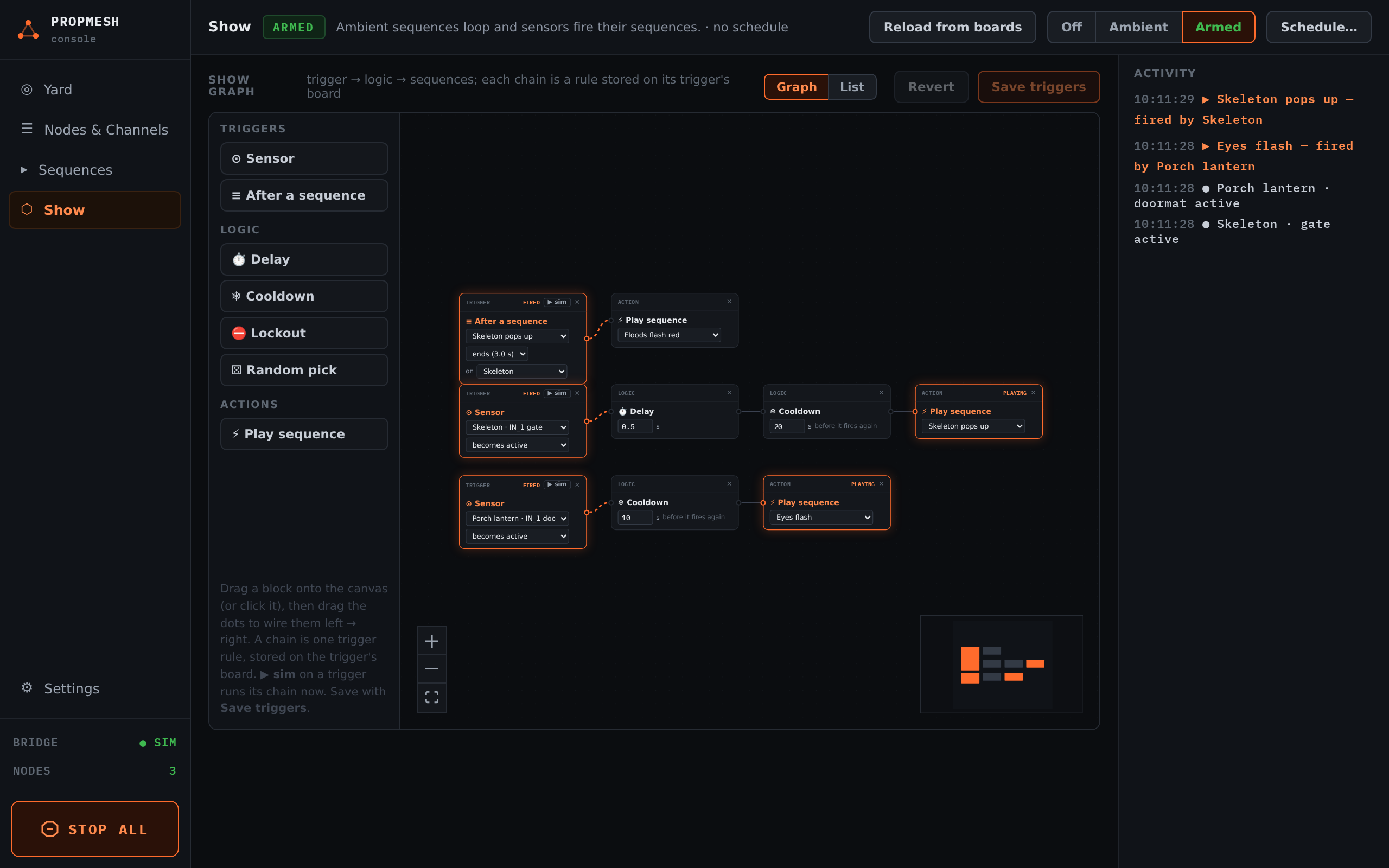
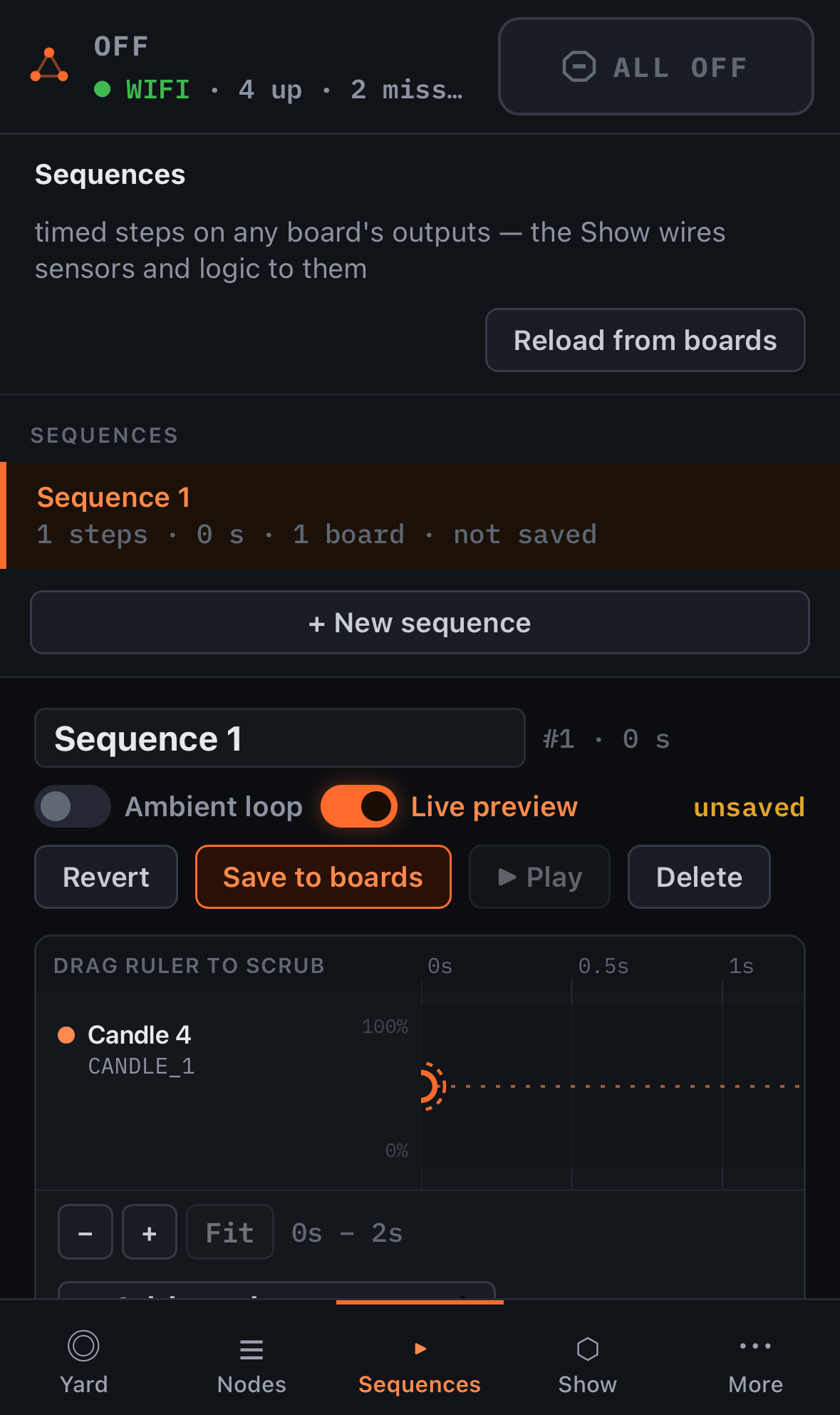
PropMesh turns those experiments into one system. Boards spread around the yard talk to each other over a radio mesh, so a sensor at the gate can set off a prop by the porch without running wires across the lawn or needing WiFi. Everything is set up from a web console. You draw your yard, tell each board what its pins do, build sequences on a timeline, and connect triggers to them in a graph. Commercial prop controllers run one prop. I wanted something that runs the whole yard.
The constraints
- Halloween doesn’t move. The deadline is the same every year, and starting in October has always been my biggest problem.
- Each board has one radio. The mesh and home WiFi share it, so the whole mesh has to follow whatever channel the router picks.
- Memory is tiny. The board that connects the mesh to the console only has a few dozen kilobytes to spare, and I found most of the limits by hitting them.
- Small props run on batteries. Those boards sleep most of the time and still have to stay in sync with the show.
What I did
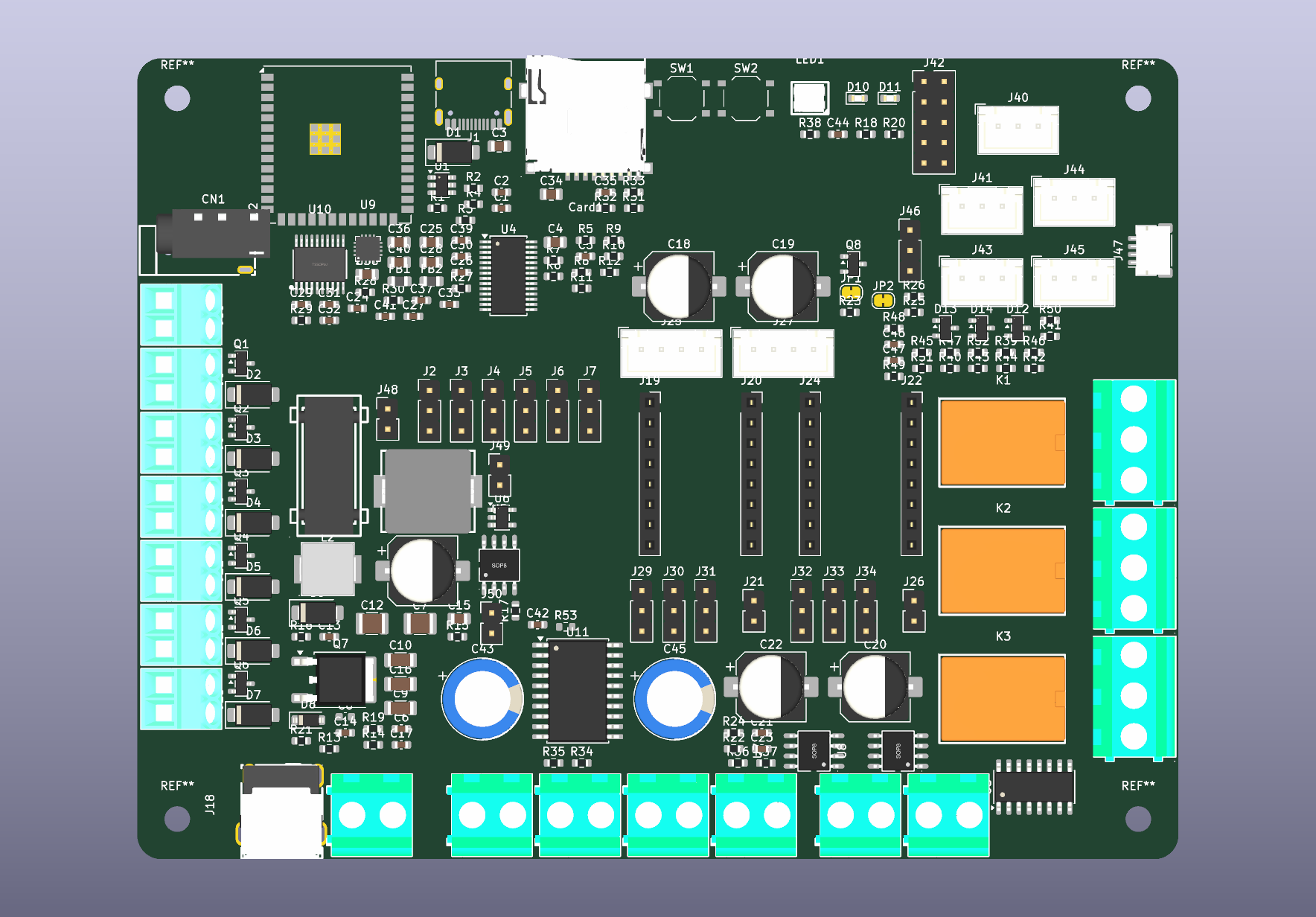
I had a hard deadline and I was the only one working on it, so I used whatever got me to a good result fastest. I used AI coding tools for the firmware, the console, and part research. My job was deciding what the system should do, making the design calls, and testing every feature on real boards. I also did the wiring, took apart and modified the props, and laid out the circuit board in KiCad, which I learned as I went.
The decisions that shaped it most were the ones where the first answer wasn’t good enough. The first version of firmware updates had each board join home WiFi. The whole point of a mesh is that boards are out of WiFi range, so updates now travel over the mesh itself. For the battery boards, I had them all wake up and check in on one shared clock, which later let setting changes go out during those check-ins. When syncing show data with a counter looked fragile over a long season, I switched to timestamps. On October 12 it was clear my own circuit boards wouldn’t be ready, so I set them aside and focused on running everything on off-the-shelf boards. That’s why anyone can now try PropMesh on a dev board they already own.
The hardest bug was the bridge board going silent overnight and leaving no clues. It took about a week of adding diagnostics to the firmware to catch it. Once a minute, the home router sent out a burst of network traffic, the WiFi driver tried to buffer all of it, and the board ran out of memory. Freeing up memory the bridge didn’t need more than doubled its headroom, and the once-a-minute failures stopped. Heavy load can still push it over, so that part isn’t finished.
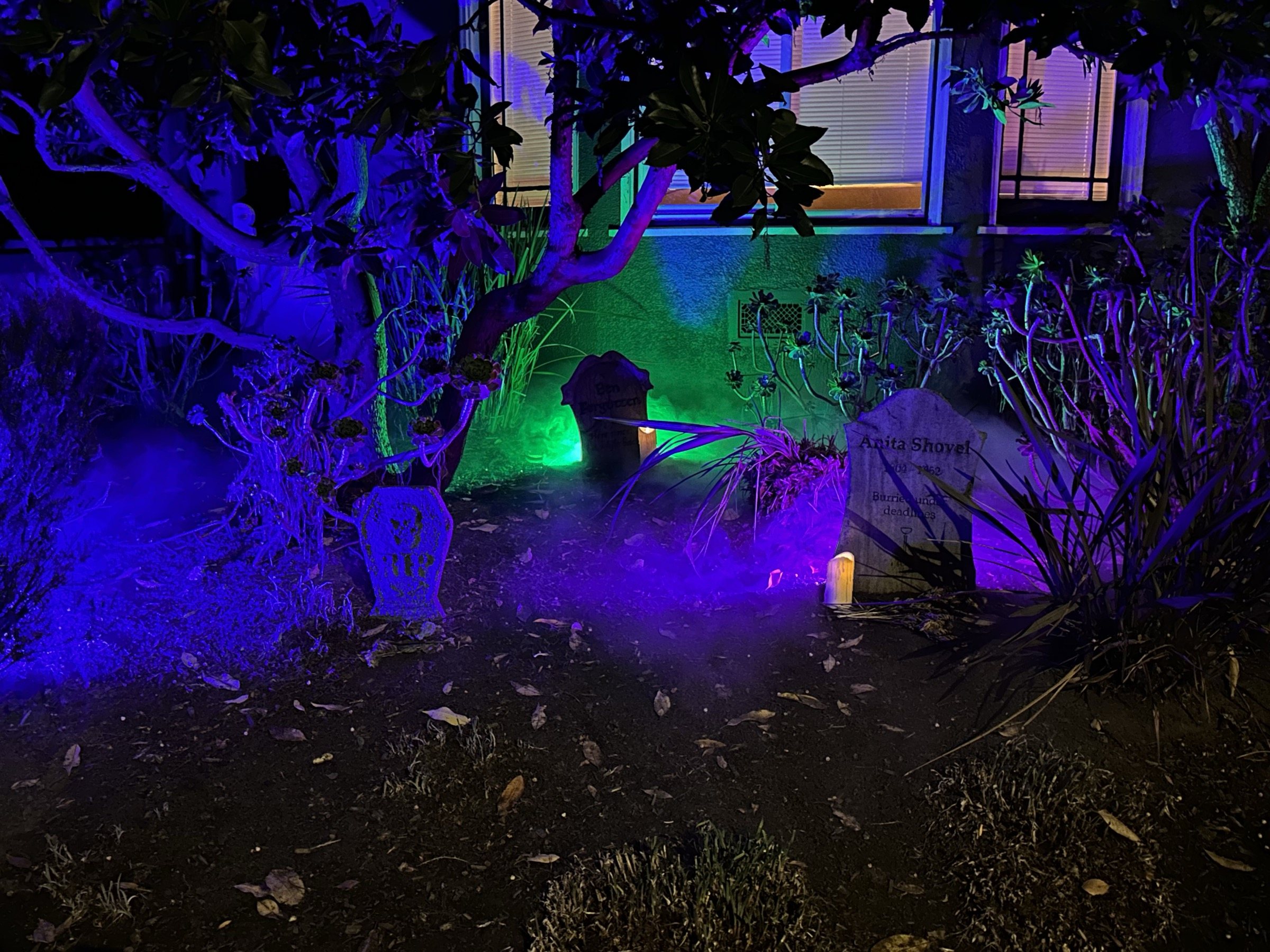
My favorite part is the candles. I gutted flameless candles that have a moving flame and put a board and a battery in each one. The flame wouldn’t move at first, and I tracked it down with a multimeter to the coil being fed from the wrong point on the candle’s board. Once that was fixed, they flickered on their own and could catch the same gust of wind together.
The outcome
On Halloween night the show turned itself on at dusk and off again on schedule, with the bridge, a repeater, and five of the six candles running. Not everything made it. The animated skull didn’t move because my 3D printer broke at the wrong time, and the night showed me the sequencer needs more work.
PropMesh is public and in beta. The docs site has an installer that runs in the browser and a console you can try against a simulated yard. The source code is open under copyleft licenses. People are welcome to build on it, as long as what they build stays open. Next up are my own circuit boards. The larger one is designed with its parts placed, and I’m routing it by hand. I’m thinking about selling boards next season, but I’m not ready to commit to that yet. Either way, the goal is Halloween 2027, finished before October this time.